

BLOG
Agbiz at the B20 Conference – Insights from the Food, Fuel and Fibre Session
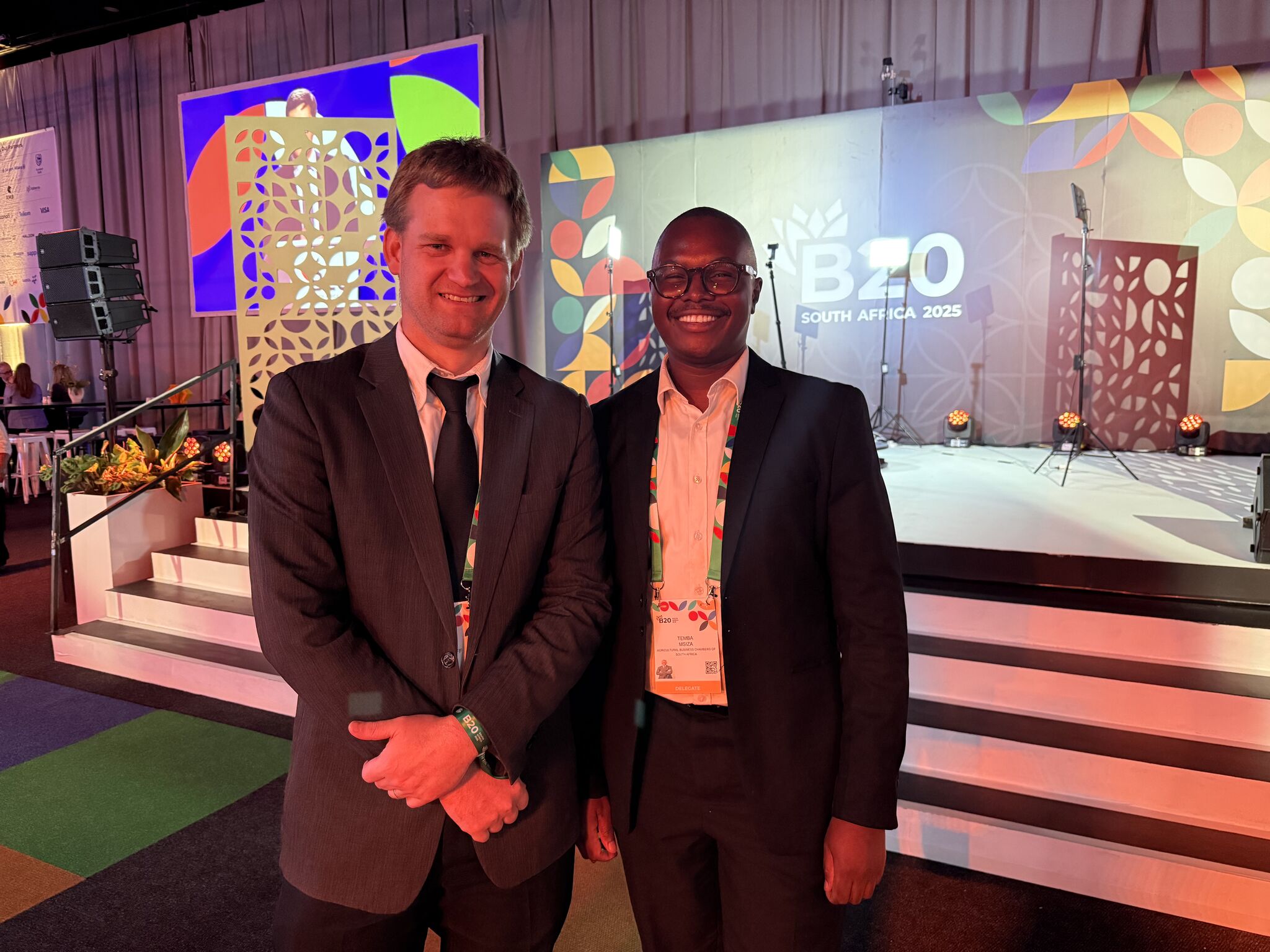
The Agricultural Business Chamber (Agbiz) attended the 2025 B20 Conference, where global leaders, policy experts, and private-sector executives gathered to confront one of the world’s most critical challenges: securing food, energy, and fibre systems in an era marked by instability, amongst many other issues.
The Business 20 (B20) serves as the official G20 dialogue forum with the global business community. Established in 2010, the B20 is one of the most influential G20 Engagement Groups, bringing together business leaders from G20 member countries and beyond. Each year, the B20 provides a platform for companies and business organisations to share their perspectives on pressing global economic and trade issues, ensuring that the voice of the business community is heard at the highest levels of international economic governance. Through this platform, the B20 works to foster consensus among businesses, set priorities on global economic policies, and deliver actionable recommendations to the G20.
One of the standout sessions at the conference was the breakaway dialogue titled “Reimagining Global Food Systems and Agriculture: Turning Commitments into Collective Action.” The panel featured Debra Mallowah (Bayer Crop Science Africa), Richard Rivett-Carnac (South African Breweries), and Thule Lenneiye (AGRA), each offering a powerful perspective on the realities shaping global and African agriculture.
A System Under Immense Pressure
The moderator opened with a stark reminder of the urgency: “Nearly one billion people worldwide face some form of hunger. Every hour, another million people join that number. And at the same time, one-third of the food we produce is wasted.”
Against this backdrop, humanitarian food assistance has been cut dramatically, almost 50% this year alone. The message was clear: the global food system is struggling, and the strain is intensifying.
Innovation Exists, But Farmers Need Access to It
Debra Mallowah of Bayer emphasised that scientific innovation is not the problem, access is.
Reflecting on the continent’s farmers, she noted: “The innovations exist. Climate-smart seeds, digital solutions, mechanisation, it’s all there. The real challenge is making these tools affordable, accessible, and scalable for the farmers who need them most.”
She stressed that 70% of the food produced on the African continent comes from smallholder farmers. Without ensuring they can access appropriate technology, inputs, and finance, she warned, Africa’s production base would not keep pace with population growth, expected to increase by 200–250 million people by 2030.
Collaboration is the Only Path to Real Transformation
AGRA’s Chief of Staff, Thule Lenneiye, built on this point, arguing that food system transformation cannot be achieved by individual actors.
“We cannot afford to work in fragmented silos. When governments, the private sector, farmers, financiers, and development partners work together, we see real change.” She pointed to AGRA’s work in the cashew value chain as an example of how coordinated partnerships can reshape industries, strengthen processing, improve market access, and support climate-resilient farming. “Impact happens on the ground when partnerships become practical, not theoretical.”
The panelists agreed that while global forums consistently produce ambitious declarations, the challenge lies in translating them into measurable outcomes. “The crisis is not in the future, it’s happening now,” Mallowah emphasised. “The question we must ask is whether we have the courage to act with urgency.”
The discussion underscored that commitments must be backed by investment, enabling policies, data systems that support decision-making, and trade environments that reinforce, not undermine, food security.
The B20 conversation made clear that food systems are central to resilience at national and global levels. From climate shocks to supply chain disruptions, agriculture remains both vulnerable and vital.
The session closed with a reminder that the world is entering a defining decade for food security. And as one panelist noted: “We know what needs to be done. The question is whether we will do it together.”
By Temba Msiza, Agbiz
0 COMMENTS
LEAVE A COMMENT