
BLOG
Global Livestock Forum: Key Insights for South African Agribusiness
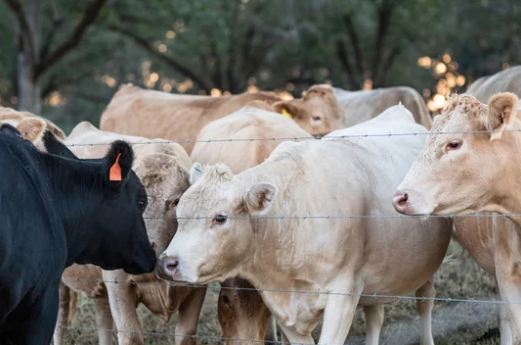
The agri benchmark global forum held on 22nd June 2026 in Pretoria, brought together livestock industry professionals, researchers and institutions from Germany, Australia, Brazil, Spain, the Middle East and South Africa. Discussions spanned the global outlook for the livestock sector, including growth prospects, market challenges, trade dynamics and emerging trends.
Despite ongoing pressure from rising energy and input costs, water scarcity and geopolitical trade disruptions, the overall tone from economists and industry professionals was cautiously optimistic. The sector is evolving quickly, and the forum created a constructive platform for considering what the next decade would look like. The forum provided a rare look at global benchmarking data, sustainability finance insights and livestock trade intelligence.
1. Technology and Innovation: The Next Decade
Several developments stood out as important areas to monitor and prepare for over the coming decade:
• Energy efficiency and the sector's gradual transition away from fossil fuel dependence.
• Greater use of sensors and precision livestock farming tools to improve production management and reduce waste.
• AI integration across production, logistics and market analytics with the potential to reshape farm-level decision-making.
• Evolving animal welfare standards and their implications for market access and consumer demand.
2. South Africa's Trade Position and the FMD Challenge
China remains one of the most important markets for the South African livestock sector. The country accounts for the majority of South Africa's wool exports and is also a significant destination for South African red meat products. That trade relationship has been disrupted by the foot-and-mouth disease (FMD) outbreak, which has suspended red meat exports to China and several other key markets, including parts of the Middle East and the Americas.
Learning from Brazil
The forum highlighted Brazil's achievement the result of a multi-decade coordinated effort of FMD-free-without-vaccination status as a practical benchmark for South Africa. Understanding the steps Brazil took and the coordinated industry effort required provides a roadmap that South African stakeholders can draw on as the country works to restore and expand market access. Restoring China access alone would represent a significant export recovery for the red meat industry.
The forum also underlined that the global livestock market is not homogenous. It is highly segmented and increasingly premium-focused, with growing demand for halal-certified and organic products. South Africa must therefore develop a clear competitive strategy on what basis it competes (volume, quality or certification) and in which segments.
3. ESG and Sustainability
ESG considerations are increasingly central to the livestock sector though South Africa's starting point is stronger than many international participants may assume. Industry and commodity organisations, voluntary and mandatory standards, procurement requirements from large retailers, and export market conditions have collectively shaped ESG thinking in South African agriculture over the past two decades.
In the livestock context, ESG can be understood as follows:
• Governance (G): traceability, biosecurity protocols and farm management practices.
• Social (S): animal welfare standards and labour practices.
• Environmental (E): production methods, emissions reduction and sustainable land management.
The three forces driving change
Across the global livestock sector, three interconnected forces are reshaping the sustainability landscape:
• Regulation: Nationally Determined Contributions (NDCs) under the Paris Agreement, the South African Climate Change Act and carbon tax are all relevant. Importantly, carbon tax is already embedded in input costs fuel, fertiliser and electricity even where farms are currently exempt from direct liability. Competitors and export markets face parallel legislation, and in highly regulated markets such as the EU, sustainability requirements have been embedded directly into trade conditions through instruments like the EU Green Deal and the Carbon Border Adjustment Mechanism (CBAM).
• Finance: Banks are formalising ESG considerations into credit assessments. Sustainability-linked loans and use-of-proceeds instruments are emerging in the South African market. Research conducted across several international sustainability standards found significant overlap with existing South African standards meaning local farmers may be closer to compliance than they realise.
• Markets: In South Africa, retailers and large buyers are driving sustainability behaviour more effectively than government regulation at this stage. Research suggests that approximately 80% of a food product's environmental impact particularly for animal protein products occurs at farm level, meaning that for retailers to meaningfully address their own emissions footprint, they must engage directly with producers. In the South African context, the approach has generally been collaborative rather than coercive: graduated pathways rather than supplier cut-offs. This reflects the country's food security imperatives and the complex realities of the agricultural landscape.
4. Sustainable Finance:
Access to finance remains a persistent barrier across the livestock value chain, and de-risking through partnerships and blended finance is central to unlocking growth. The forum explored how sustainability considerations are increasingly embedded in lending decisions and what this means for South African producers.
5. Data, Traceability and the Communal Farming Gap
A recurring challenge across the forum's sessions was the lack of reliable livestock data particularly from communal farming communities. The reluctance to share data is often not simply unwillingness; it frequently stems from uncertainty about how data will be used and who will benefit. Addressing this requires better communication, education and transparent data governance frameworks.
On traceability, South Africa's efforts are progressing, but individual animal identification and movement tracking at scale remain a significant operational challenge. The current national traceability drive is advancing documentation requirements across large commercial herds an initiative that will require sustained collaboration between government and the private sector.
Data infrastructure underpins virtually every other priority discussed at the forum: FMD surveillance and control, finance risk assessment, sustainability reporting and export certification. Industry organisations are beginning to build shared data systems across value chain segments, and this merging of data platforms could become the foundation for scaling sustainability practice across the sector.
6. Panel Discussion: Trade Readiness, Finance and Competitiveness
The panel discussion drew together several interconnected themes across trade readiness, financing and competitiveness:
• Traceability: South Africa's traceability efforts are advancing, but individual animal identification and movement tracking remain a major operational challenge that will require sustained government-private sector collaboration.
• Meeting global standards: Export access depends on consistent, certified quality and alignment with international buyer requirements. South Africa needs coordinated investment in quality systems to retain and grow its export portfolio.
• Access to finance: This remains a persistent constraint across the value chain. De-risking through partnerships, blended finance instruments and public-private collaboration is central to unlocking growth — particularly for smaller and emerging producers.
• Research and development: Public-private investment in R&D is needed to strengthen the sector's intellectual capital and competitive positioning in export markets.
• Learning from the fruit sector: South Africa's stone fruit industry offers a useful model of coordinated trade strategy and joint investment in market development. The livestock industry can draw on this example as it considers how to improve sector-wide coordination.
• Market segmentation: The global market is not uniform. It is highly segmented and premium-focused, with growing demand for halal-certified and organic products. Volume and price remain core demand drivers, but certified quality offers South Africa a path to competitive differentiation.
Takeaway
The agri-benchmark forum delivered economic analysis and valuable global benchmarking data. Economics and data are foundational to the agricultural sector they underpin informed decision-making and provide critical insight into both the opportunities and challenges shaping the industry. Efficient data collection, accessible data and sound analysis are what enable the sector to move from observation to action. As an industry, the ongoing priority must be translating these insights into practical, accessible information that farmers and value chain participants can apply in their day-to-day decision-making closing the gap between analysis and real change in agribusiness.
The overarching message from the forum is that the South African livestock sector has strong foundations in its industry organisations, its existing standards, its banking system and its producer knowledge base. The task now is alignment of incentives, data infrastructure and sustainability pathways across all value chain participants, with finance acting as the bridge through the transition.
0 COMMENTS
LEAVE A COMMENT