

BLOG
SONA: Reforms welcomed, but the sector will judge progress on implementation
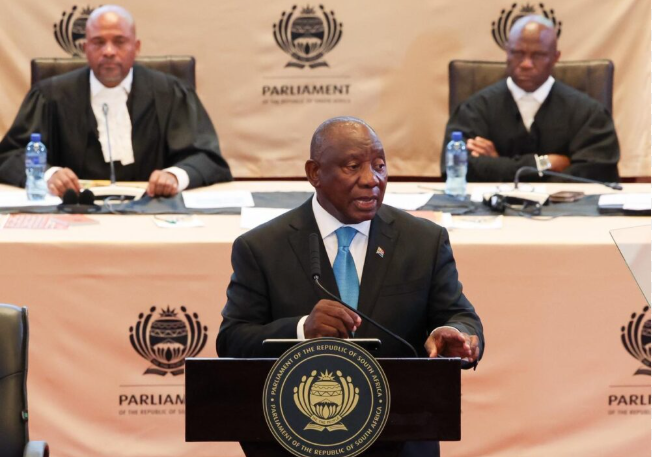
After the President delivered the 2026 State of the Nation Address, Agbiz Chairperson, Mr Sean Walsh, stressed the need to follow up commitments with real action. “There are several positives that we have to recognise: South Africa’s removal from the grey list, the disbursements towards blended finance and the classification of foot and mouth disease as a national disaster. While the commitments regarding local government reform and infrastructure spending are encouraging, we will hold off on celebrating until we witness tangible implementation of these reforms.”
Speaking about the challenges faced by agribusinesses in rural towns, he added: “For agribusinesses operating in rural towns, interruptions in water and electricity supply and neglected infrastructure such as roads and rail represent our single biggest challenge to doing business. Agribusinesses spend millions each year performing the functions that municipalities should fulfil. We do so because we have to, but it increases the costs and erodes our ability to operate sustainably. We are actively participating in the White Paper on Local Government, but there must be financial consequences for municipalities that don’t perform. In this regard, we will watch the development of the incentive scheme closely, and we call on the government to follow through with its threat to remove functions from local governments that don’t perform.”
Agbiz CEO Theo Boshoff echoed these sentiments and called on the government to protect critical industries that drive inclusive growth. noting both opportunities and policy concerns affecting the sector. “From an agribusiness point of view, it was good to hear the President emphasise the contribution that the agricultural value chain makes to inclusive growth and employment in the country. Be that as it may, it cannot be taken for granted that the sector will always be competitive in the face of serious challenges. Reference to increased excise and restrictions on advertising in the liquor industry is a case in point. On the one hand, a new structure is being created to investigate illicit trade, but on the other hand, we are making policy pronouncements that make it near-impossible for the legitimate industry to compete with the illicit economy. A dose of realism and pragmatism is sorely needed.”
Addressing animal health and collaboration with the private sector, he added: “To the President’s credit, he recognised the importance of combating Foot and Mouth Disease, but we would have liked to see more details and extend an olive branch to the private sector to assist. Whilst we recognise that the state must play the central role in eradicating a controlled disease, the state’s efforts must be complemented by pre-emptive, voluntary vaccination by the sector as soon as sufficient vaccines are available for purchase. The focus must surely now be to vaccinate as many animals as possible in the shortest possible time. For this to work, we need to collaborate in the same manner as we did during the Covid-19 vaccine rollout.”
Finally, Agbiz welcomed the announcement that additional capacity is being made available for trade negotiations at such a critical time. “Many subsectors are trying to find alternative markets after the imposition of 30% tariffs by the United States. The private sector can find markets, but we will only be competitive if the state can negotiate tariff concessions akin to those enjoyed by our biggest competitors in the Southern Hemisphere. The world is lining up to negotiate new trade agreements, and we need to be right in the mix of things as a country.” This, according to Agbiz Chairperson, Mr Sean Walsh.
For enquiries:
Temba Msiza: temba@agbiz.co.za
0 COMMENTS
LEAVE A COMMENT